
Article summary
A practical guide to the battery, panel, load, controller, alarm, and location data that helps teams operate solar street lighting projects after installation.
Note 01
Solar street lighting projects are easier to maintain when the monitoring plan is defined before the first batch is installed. The controller should make the important operating data visible to the people responsible for commissioning, maintenance, and project handover.
Note 02
## Start with the energy path
Note 03
A useful monitoring model follows the energy path from the solar panel to the battery, load, and lamp. This helps the operator understand whether a dark lamp is caused by generation, storage, control, wiring, or the luminaire itself.
Solar street lighting projects are easier to maintain when the monitoring plan is defined before the first batch is installed. The controller should make the important operating data visible to the people responsible for commissioning, maintenance, and project handover.
Start with the energy path
Recommended solution
Explore the matching solution
These pages connect the topic to the related solution, software, and product pages.
A useful monitoring model follows the energy path from the solar panel to the battery, load, and lamp. This helps the operator understand whether a dark lamp is caused by generation, storage, control, wiring, or the luminaire itself.
Battery and solar panel data
Battery voltage and current, solar panel status, and charging or discharging data are useful for checking the daily operating condition of an off-grid lighting asset. The exact data points depend on the solar charge controller and the interface available for integration.
Load and controller status
Load status and controller parameters help separate a lighting schedule issue from a field hardware issue. A project team can also use lamp status, communication status, and fault alarms to prioritize maintenance instead of waiting for a complaint.
Location and asset records
A device map connects each controller to a physical location and an asset record. This is especially useful when a contractor hands a solar lighting project to an operator who did not install the original equipment.
Choose the communication path
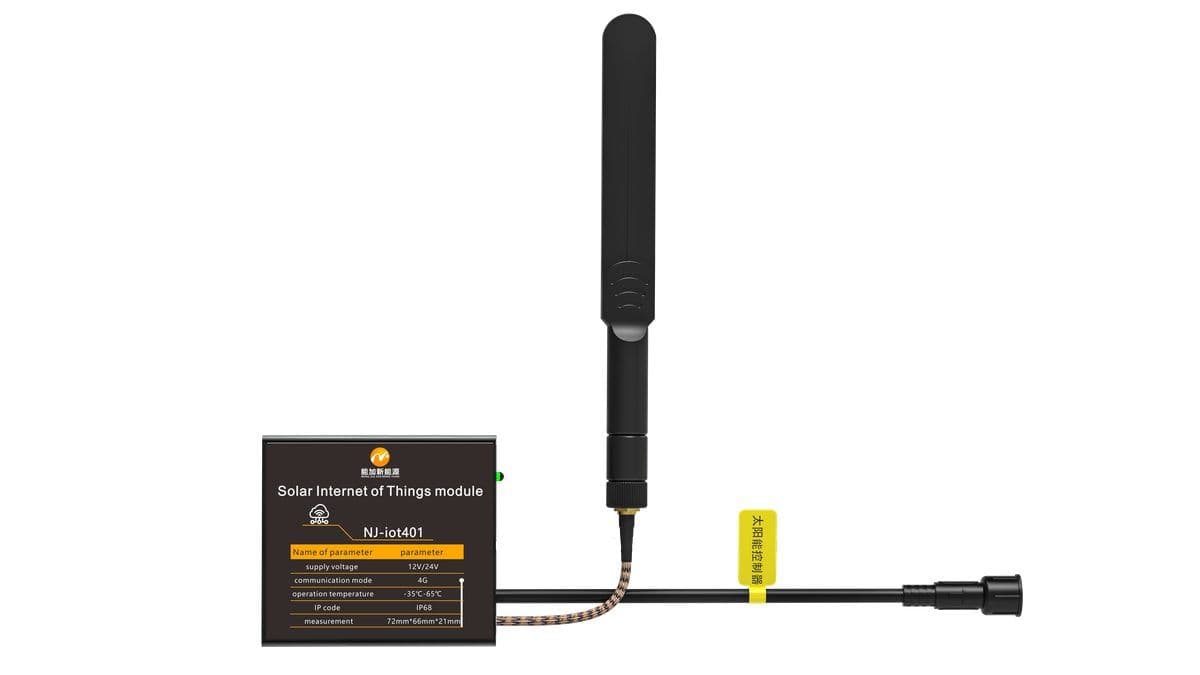
4G Cat.1 can provide an independent cloud connection for each compatible controller. LoRa can connect distributed nodes through a gateway, while Wi-SUN can be considered for dense mesh-style lighting networks. The choice should follow the project geography, node density, carrier availability, and operating model.
Prepare the integration checklist
Before sampling, confirm the solar charge controller interface, UART or RS485 data points, network option, alarm requirements, platform access, and target-country communication requirements. Compatibility should be verified with the actual controller and luminaire combination.
Conclusion
The best solar street light monitoring plan is specific enough to support daily maintenance but flexible enough to match the project hardware. Start with the energy path, define the required alarms, and test the data flow before bulk deployment.